
Words Helen Jennings
Safi Niang’s tender practice teaches us about the collective memory held in cloth
For Safi Niang, the journey is as important as the destination. Across her work in textiles, painting, performance and creative direction, and as part of the Atelier Ndokette collective, the artist believes in the power of collaboration and community above all else. In the hands of many, the intersections of body, memory and material culture unfold in the shared act of making.
Niang was born and raised in Conakry and started modelling at an early age. She moved to the south of France to study business engineering before landing in Paris, where she first began styling personal projects with Senegalese photographer Souleymane Bachir Diaw. In 2019, they shot the photographic series ‘Ndokette Session’ in Dakar with textile and movement artist Ibrahima Ndome, and the transdisciplinary triumvirate was born. Since then, their expansive endeavours have continued to channel West African cosmologies rooted in relational creativity.
Here, Niang addresses the ways in which both material and immaterial knowledge can be carried, stored and transmitted through embodied practice.
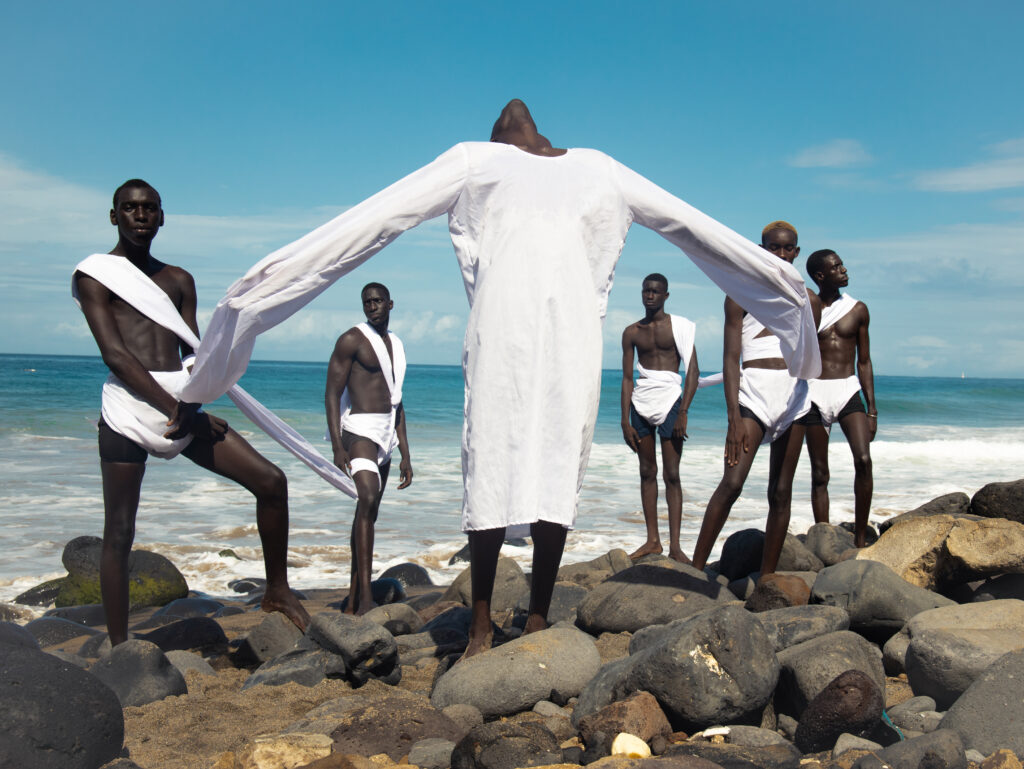
“Atelier Ndokette takes its name from a style of tunic that is commonly worn by women across West Africa. For our first project, we decided to follow the places where Black people have moved, for whatever reason, and where these kinds of similarities have survived and resisted across time. We worked with everyday clothes and objects, either given from family members or found in markets and tailor shops. From these, we made a 10-metre-long dress to highlight the almost invisible threads that keep communities together. We also incorporated elements of Senegalese wrestling costumes to tie individuals to each other and the idea was to start a conversation with the people that would eventually see those pictures.
“Fabric will not talk to you but if you listen to it and observe it, you’ll learn a lot about your ancestors”
Then Covid hit so we had time to deepen our research into clothing and fabrics and shape how we could bring our worlds together. I see the collective as a lab that allows us to take ideas and go further and deeper together with them. We were also inspired by Laboratoire Agit’Art, an experimental art collective co-founded by Issa Samb (Joe Ouakam) in Senegal in the 1970s. They made politically engaged work that talked about everyday problems, and they took art into the streets, rather than keeping it in the white cubes of the art world. We became interested in public art installations that share knowledge with people as they interact with them. And that’s how the collective was built.
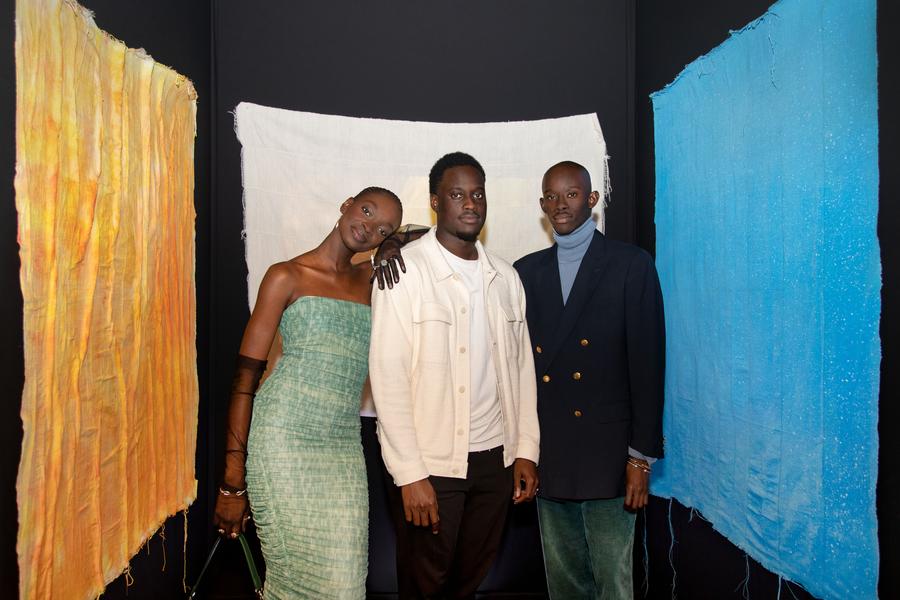
We focus on fabric and clothing because when people travel across the world, it’s what we take with us, it’s part of us. And that makes it the most efficient way of talking about the transmission of histories. Fabric will not talk to you but if you listen to it and observe it, you’ll learn a lot about your ancestors.
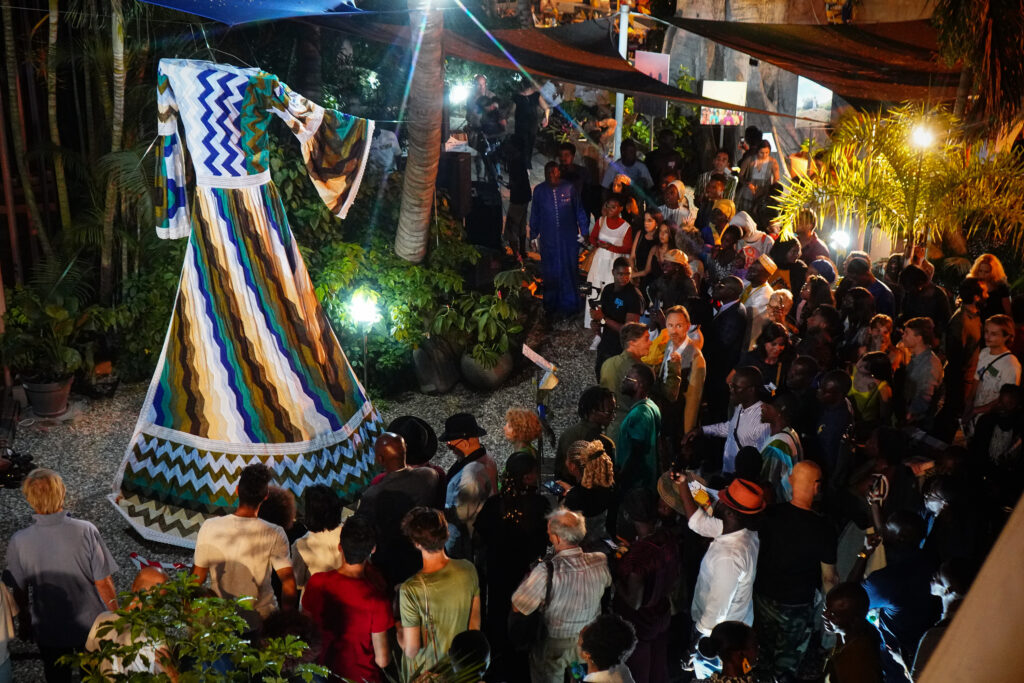
In 2021 we won the Ellipse Art Prize, which included a residency at Cité Internationale des Arts and exhibition at AKAA art fair in Paris. That’s when we realised we’d found a language that others could understand. From there, we undertook a residency at the Institut Français Dakar Sénégal and presented the ‘Tocutugol’ exhibition in 2022. Tokutogol is a Fulani word that means bringing something back together. For example, if you break your slippers, it’s the process of learning to fix them, rather than going to buy another pair. We worked with a tailor called Khadim, who’s from the Mouride religious group that has a specific way of making patchwork clothing. We gave him fragments of deconstructed bubus and asked him to make a 4-metre-long dress that opened at the centre. And once it was installed, you could go inside and discover small strips of textiles with the names of everyone we had encountered during the making of the project written on them.
One issue we have in Africa is that we don’t have archives in the way the West comprehends them. We have oral archives but if you don’t know the right person to speak to, you might not find the full information. So archiving is an important part of our process. And if in 100 years someone finds this dress that we have made, they’ll know where to start learning about it.
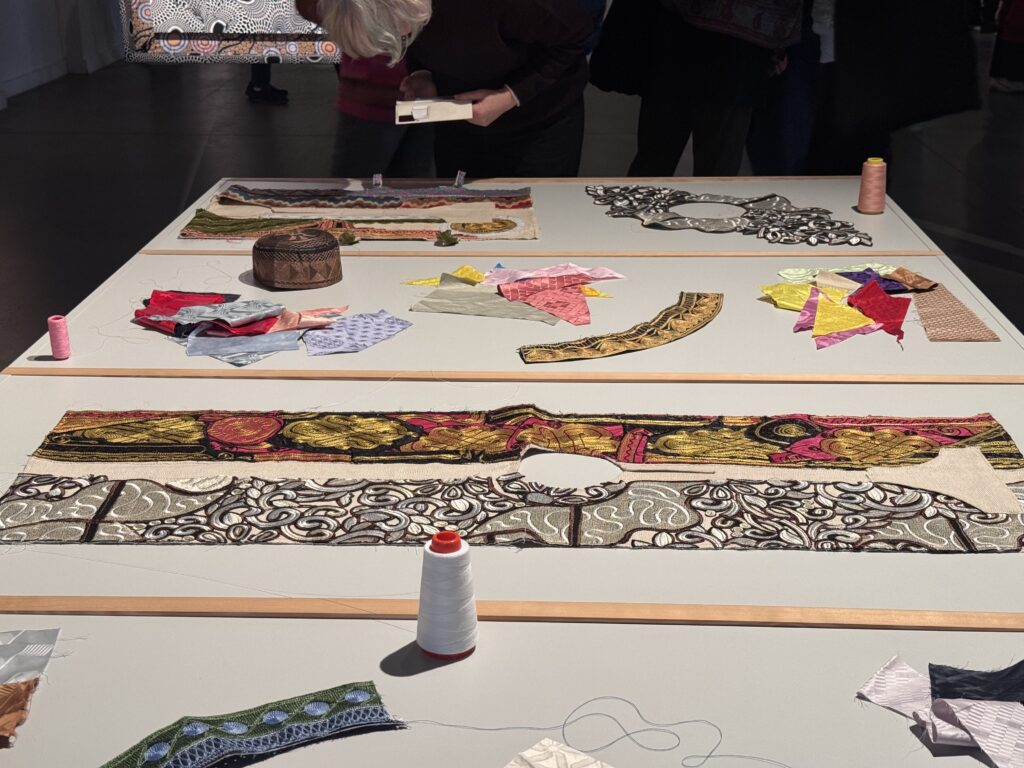
Since then, the collective has continued this idea of reuse. The neckline embroideries we took from the dismantled bubus became part of our project at the recent International Textile Triennial at Centralne Muzeum Włókiennictwa in Poland. Entitled ‘Resisting Capitalism and Imperialism Since Five Centuries’, we created a tailor shop installation filled with reconstructed pieces. We had these old ways of doing embroideries, which were perfect in their imperfections, next to new 3-D printed embroideries, which were perfectly straight. Other items represented garments men would wear to work in the fields or women would wear under their clothes as a form of protection. The idea was to think about the long and unknown histories of a garment like the bubu, which holds both Asian and Arabic influences. What did the first one look like and how did it transition through all of these cultures? We were also thinking about the many textile traditions and special relationships people have with artisans are being lost to global imports and new technologies.
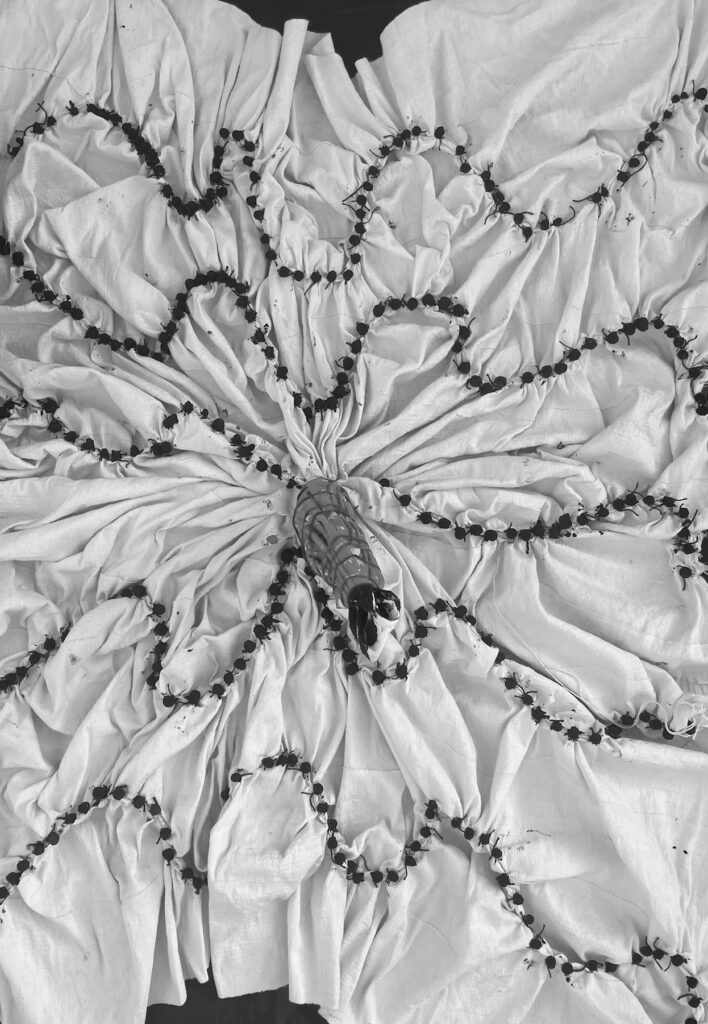
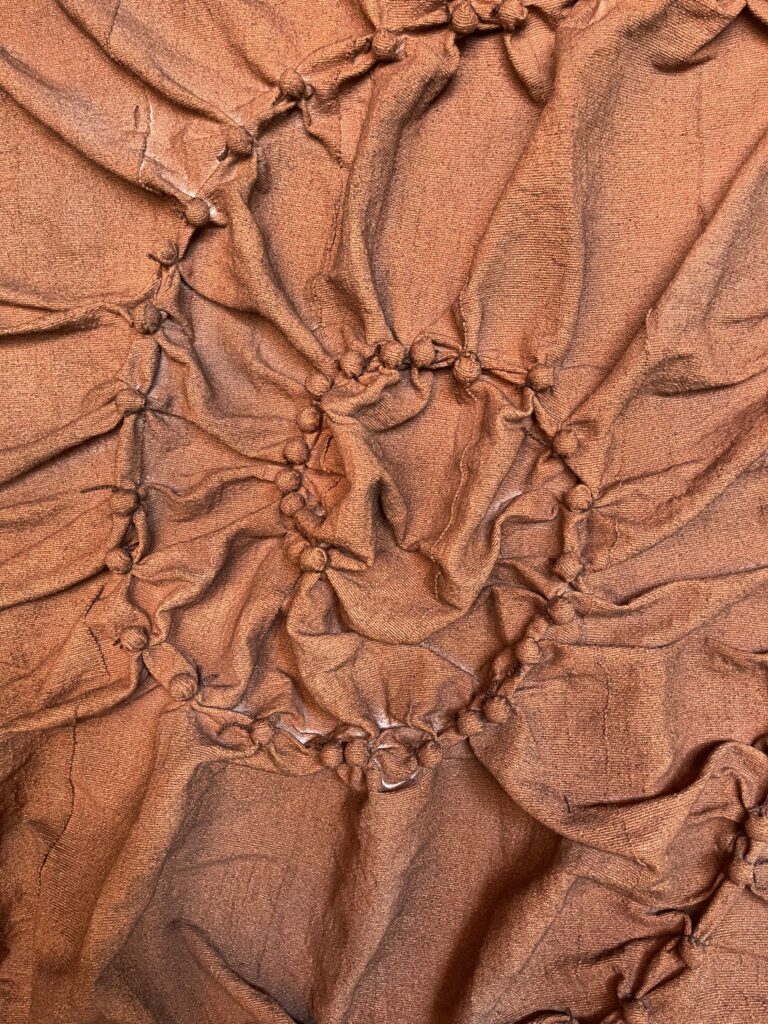
For my part in these projects, I’ve become interested in the processes behind different prints and patterns. To make a familiar batik fabric, there is the pleating and dying, then the untying to reveal the design. In my practice, I focus on that hard work but I don’t do the reveal, which becomes a metaphor for becoming. The time that passes between the idea and the realisation is not linear and sometimes there isn’t a specific result. It’s a way of addressing the transmissions between women that aren’t documented or valued in our societies. I’m also intrigued by different natural dyes and the plants we use to heal ourselves. We’ve lost faith in natural healers so I’m finding new rituals by working with pigments like hibiscus and kinkeliba. I also add different seeds into the untied fabrics that address different stages in a woman’s life.
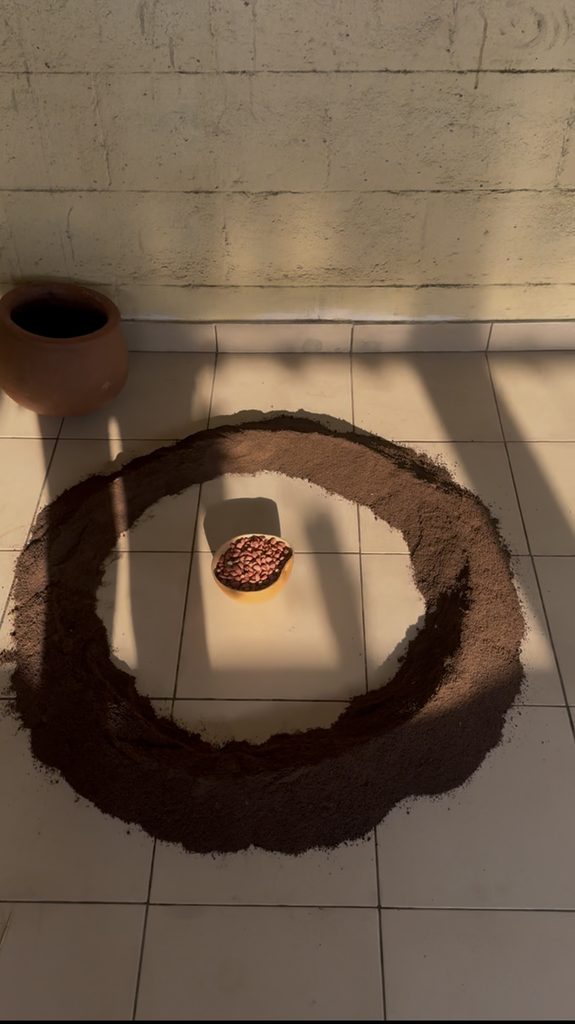
My first live performance, a ritual of caring, was at this year’s Lopo Lopo Festival in Benin. Its theme was ‘Do you remember to water your plants?’, which I understood in relation to how we feel like there’s less and less time to connect but we need that connection to be active in our community. I come from the Fulani tribe, who traditionally have a nomadic lifestyle. But when they stay somewhere for some time, they build a family garden that requires attention and presence. And for me, that became a gesture for how we have to water ourselves and the people around us. We have to focus on healing as a continuous process.
My own family came from Senegal to Guinea a long time ago. And that family was part of a community that was a mango seed – a solid centre that was proactive in terms of their culture, which was slightly different to the Fulani people of Guinea. It was interesting to see them navigate those differences and blend in despite the everyday reminders that we were outsiders – even though, if you think about it, before colonisation it was one big kingdom. And so, I learnt the power of belonging; of believing that I’m not alone.
And that, I think, is how we ended up having so many people being supportive of the collective – because we have been asking the right questions about how we move forward as a people. We focus on what brings everyone together rather than our differences. And we address the fact that times are changing. Yes we must focus on the preservation of our cultures but we’re also welcoming new ways of doing things. It’s about respecting that linearity so that information is not lost and no one is left behind.
This belief feeds into how we exchange with artisans, who become our colleagues and teachers. For example, when we were working with Khadim, we discovered he is fluent in Wolofal, which is writing Wolof in Arabic. So, for one of our pieces entitled ‘YUUXUL’ (shout in Wolof), we 3D-cut some Quranic tablets in unexpected shapes and Khadim acted as a guide for translating what we wanted to say. And the writing process became a ritual in itself, moving from French and Fulani to Arabic and Wolofal, onto textile and calligraphy pieces. We wrote from midnight to 6am and it was a really beautiful experience.
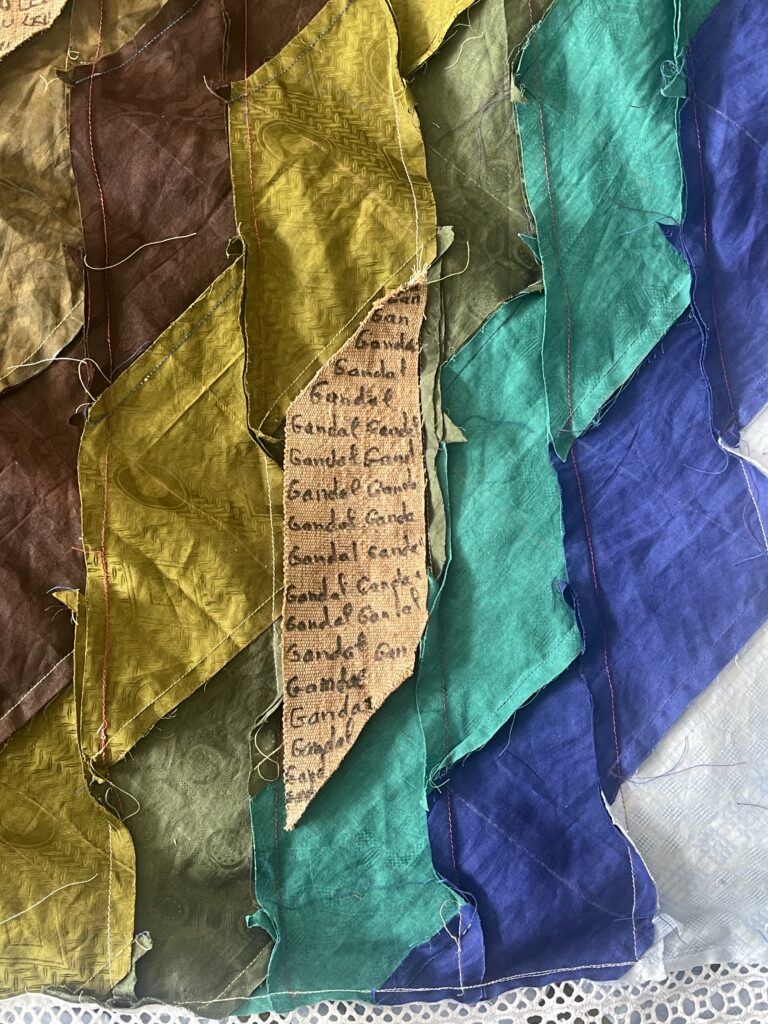
By the end of the project, we then helped him to realise that he had a unique way of making patchworks and that he should protect his designs. He came to the ‘Tocutugol’ opening with his tailors, all wearing bubus of this same geometric design as the installation, which created a conversation around their skills and their position in the art world. It’s important for the collective we recognise what everyone brings to the project.
Right now, I’m working on my own concept that I’m calling ‘Textile and Musicalities’. I want to come up with a way of merging West African sonorities with a new kind of alphabet – a way to write sounds that are not written. I’m researching the different patterns that already exist in hand-woven fabrics and how they can be connected to sounds. And I’m working with an Ivorian musician who studied Berkeley and is travelling around Africa recording ancestral rhythms. Often the process is more important than the result, but we’ll see what emerges!”
Words Helen Jennings


