Renée C. Neblett and Esi Ellen Oto on how regenerative textile design stems from collaborative learning and making
Words Helen Jennings
“I’ve learnt that in the Ga culture, children are raised by their grandparents. The parents offer the stability but the grandparents impart the wisdom. I find that so beautifully holistic,” says Renée C. Neblett. The same could be said of her life’s work at The Kokrobitey Institute (KI). Since establishing this non-profit learning and design centre in the Ghanaian fishing village of Kokrobitey back in 1992, the woman everyone around here affectionately calls Auntie Renée has nurtured an inter-generational, transcultural approach to situated learning that honours Africa’s traditional knowledge systems.


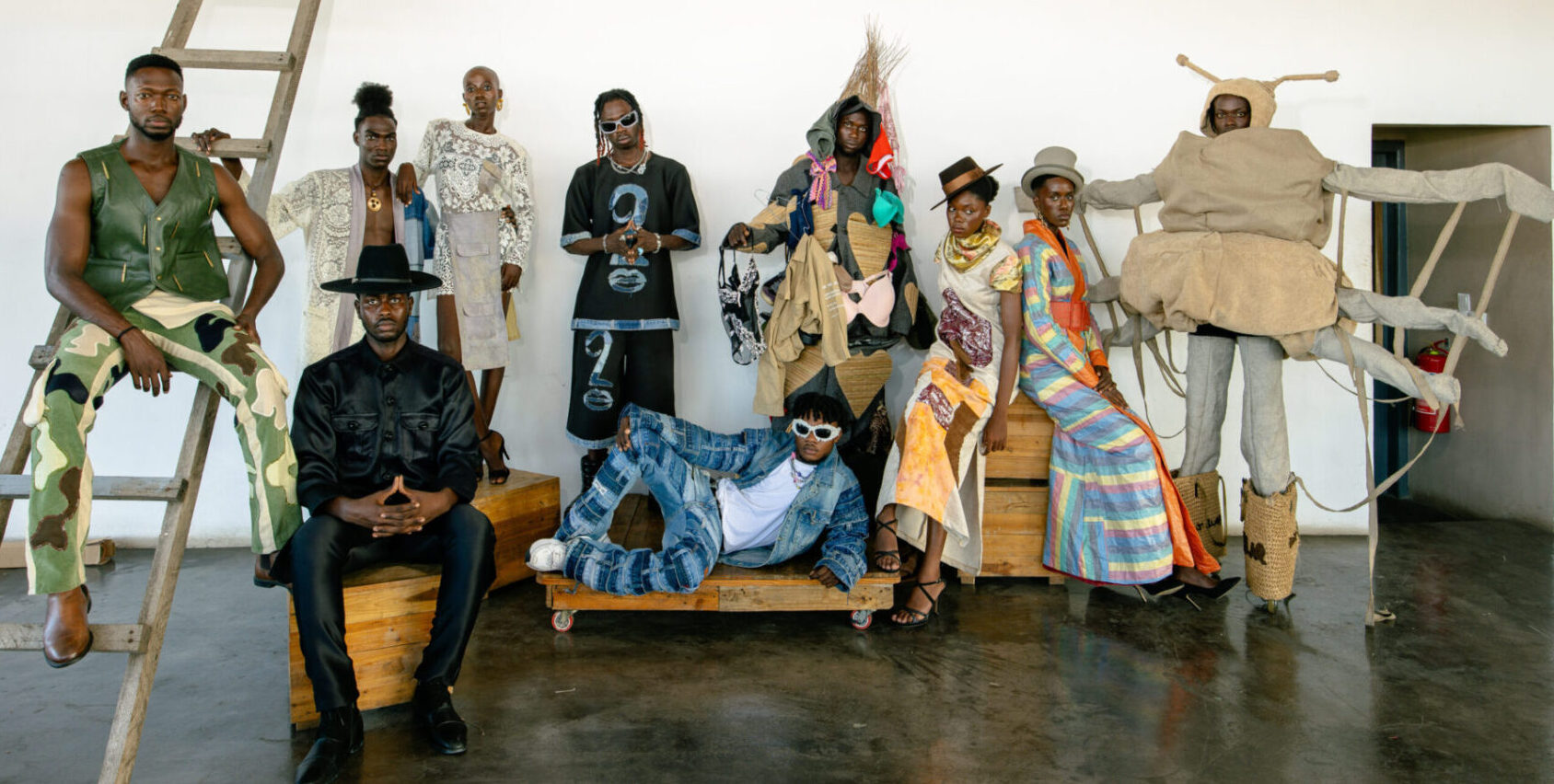
Over the years everyone from school children and artisans to academics, designers and entrepreneurs have been welcomed to this shoreline campus where the Alero Olympio Design Centre sits among edible and medicinal gardens. Acting as a school, makerspace, residency and think-tank all wedded to rediscovering our original relationship with nature, this haven is where Neblett and her team are pioneering community-centred thinking around sustainable textiles, art, agroforestry and enterprise. And one of its biggest success stories to date is Wote, a fashion label taking recycled textiles to the catwalks of Berlin, Lagos and beyond.
“It’s a busy kind of day. We’re dying, we’re weaving, we’re working with sisal fibre, we’re working with glass, we’re working in the gardens. It’s all going on,” Neblett adds as she sits down with young designer Esi Ellen Oto, who heads up the fashion studios at KI, to discuss how textile knowledge is produced and transformed through collective learning and embodied practice.

Assemblage Journal: Renée, you were raised in Boston and have lived deeply as an activist, student, model, artist and scholar. How did you find your way to coastal Ghana?
Renée C. Neblett: I was a child of the Civil Rights movement and ended up in Düsseldorf to study, which is where the language of race politics was exposed to me as an African American. I was meeting people from all over the world and it made me realise that we’re not organised into some colour-coded hierarchy but rather distinguished by our culture and ethnicity. I came back to the US as a Harvard fellow and then as an artist-in-residence at a private prep school in New England. And in an effort not to be engaged in that kind of racialised discourse within academia, I decided to offer a short-term study programme to Ghana with a goal of introducing Africa as an old world to the Americas and part of all of our shared cultural heritage.
“Primary literacy is reading your environment, knowing what nature gives you and what you’re obliged to give in return” Renée C. Neblett
When I landed in Kokrobitey I found it to be the most verdant landscape I’d ever seen in my life. I’d never been any place without running water or electricity before yet I found this incredibly vibrant, living society. I was amazed not only by the physical beauty, but with people’s knowledge about their environment. They were fully conversant in what every leaf and root could do. And that influenced my sensibilities about what it means to be literate. I used to believe that it started with reading and writing. Here I learnt that actually primary literacy is reading your environment, knowing what nature gives you and what you’re obliged to give in return.
Assemblage Worldwide: How did KI take shape?
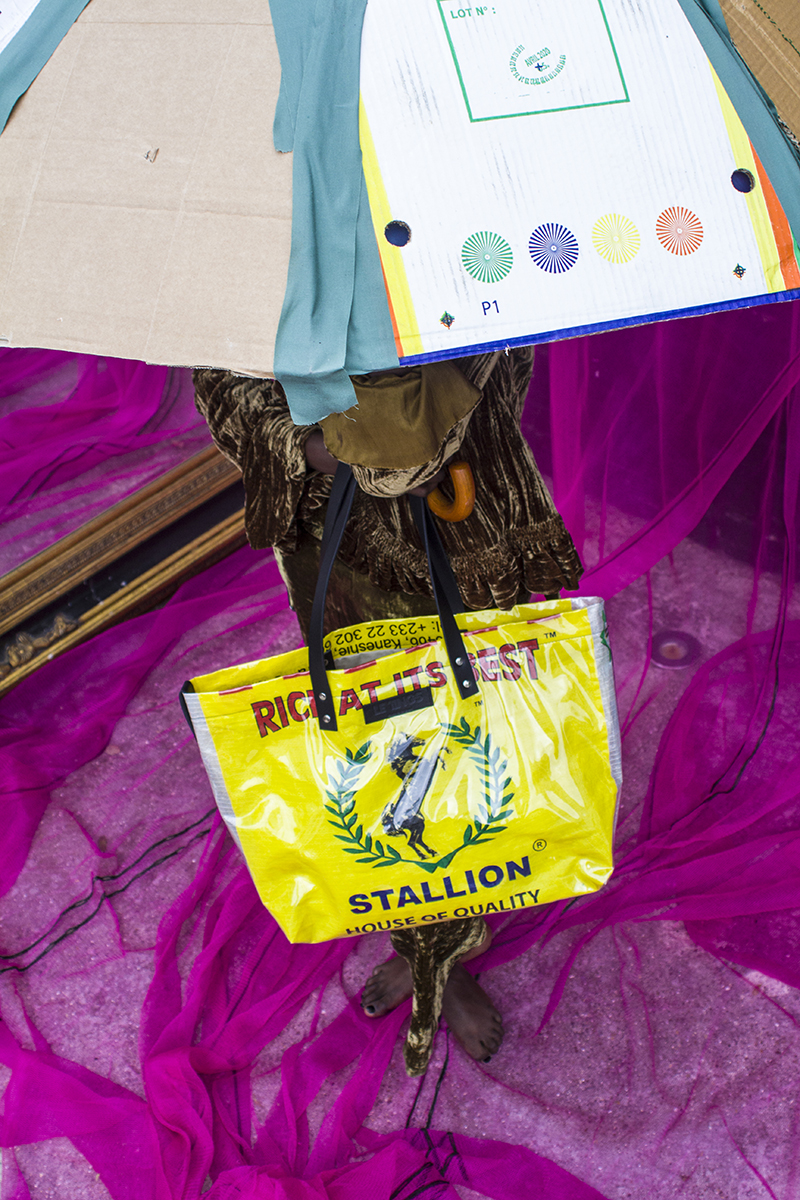
Renée: I had access to some land and a vision of what was possible. The institute gradually evolved as a result of looking at what so-called development has done to compromise the environment. Honestly, the only thing that big business has given the average person is trash. So, we made a conscious decision to dedicate ourselves to looking at traditional Ghanaian knowledge systems as they relate to sustainability and development. We asked, what can we do with this trash, with what’s around us, and build on the skills that people have? We started out modestly, making shopping bags out of flour sacks for example, and just kept experimenting along the way.

Assemblage Worldwide: Esi, what was your introduction to KI?
Esi Ellen Oto: I’d previously attended a technical college and arrived at KI in 2019 to join a production team making kimonos from old bed sheets. Then Covid hit and we started making masks and I decided to stay. For me, it was exciting to learn alternative ways to make and use fabric.
Assemblage Worldwide: Your Esi sweater is one of KI’s biggest learning adventures in textile innovation.

Esi: In 2023 we did a sustainability workshop with Bubu Ogisi [IAMISIGO] and The Textile Institute where we re-worked waste from our sewing studio. That progressed into turning secondhand men’s shirts, sourced from Kantamanto Market, into strips and weaving them into panels. We started with very simple looms and as they became bigger, we were able to try different things. And that evolved into the first sweater. Now we’re also using T-shirts, which have a softness and flexibility that means you can cut them into very long strips and turn them into balls of yarn.
Renée: You know, when you’re doing something for the first time, you can’t make a mistake. You can just make a discovery. So, we were emboldened to just play with it. If you have a keen interest in weaving, the way Esi does, you can go on that journey with openness. We referenced different weaving techniques, developed a range of looms, and expanded everyone’s vocabulary. What’s dynamic about it is that we’re still asking, what does good design look like? And through that process we have seen the potential of the Esi sweater.

Assemblage Worldwide: Then came the Esi Project interdisciplinary training programmes for young people.
Renée: We made an instructional video and handed out looms and materials to around 20 kids. The goal was to offer a decentralised production model in the village. Participants could weave at home at their own pace. But what’s interesting is that they wanted to come back to a space where they could work together. And that was a reinforcement because traditional culture is a way of being, it’s communal. So, we opened a skills training centre where the Esi sweater could be made.
The whole process is one of discovery and refinement. It’s not enough that we’re using all of this abundant waste material. What makes it special is the exploration of weaving techniques as a way of creating jobs and continually evolving the outcomes. Each evolution of the loom becomes a canvas for other products as we’re able to move more into the complexities of the weaving world.
We’re happy with the Esi sweater but we know we can do more. We’re now looking for wider distribution as we build capacity, which is something we’re on the cusp of – how to produce to scale while keeping the artisanal quality of each piece. And whether or not the source material is waste, the skills we’re practicing are making a real impact on people.
Assemblage Worldwide: You’re presenting Wote’s third collection at Lagos Fashion Week 2026 this October. What’s in store?
Renée: We’re playing with the spirit of the men’s shirts and T-shirts again but in a different way. We’re using dying methods using turmeric and kola nut to create a whole vocabulary of colours. Applied over a striped shirt, it results in some interesting textures. And then we end up with these shirts that look like works of art through this system of construction. We’re using batik on other pieces, which creates a nice line and energy, and we’re trying out a new bleaching technique. The overall look is elegant and comfortable.

Assemblage Worldwide: Away from fashion, you’ve also made great strides with More Than A Tree. Tell us more.
Renée: This educational programme revolves around our organic gardens. It started by us cataloguing all the flora on our facility and interviewing local people about their traditional uses. You learn that, generally speaking, people think of food as medicine. And it’s been really fascinating trying to turn that information into educational materials.

What’s fascinating is that in the Twi language, the word for body is ‘nipadua’, which literally translated means ‘human tree’. So, people who thought of themselves in that way had a certain kinship with the environment. I was privileged to get a glimpse of that when I first arrived. And as I’ve said, I thought these were the smartest people I’d ever met. They knew not to fish on Tuesday because the seas needed a day to rest. And when they saw a tree, they didn’t see timbre, they saw oxygen, shade, food, medicine, clothing, a habitat for other living things. You know, it was like the arm of God.
Assemblage Worldwide: Taking the long view, what change do you hope KI will have?
Renée: Conscious change is about your values. It’s asking, what are you building and what is it really for? We know that civilisations have come and gone. And I think that years from now, we will realise that our civilisation caused more damage to the environment than anything that came before us. We shouldn’t be trying to create wealth. We should be trying to create a living, and a society where everyone is valued. And what we realise through our work is that there’s a whole dynamic world out there. So great things at the end will be an accumulation of many small ones. A lot of folks are on our path. That’s exciting to me. And it outweighs the heaviness that can come with looking at the current realities.

Assemblage Worldwide: What is your take, Esi?
Esi: There is hope. The conversation is broad in my generation. I’m privileged to be in the institute but you can’t criticise someone who hasn’t had a chance to imagine what he or she can do. What we do here is trying to get that information out there. All indigenous knowledge systems around the world understood something about the environment. And those systems have all the answers, in principle, for how to re-imagine a future.
Visit The Kokrobitey Institute
Words Helen Jennings