On an axis between Accra and Zurich, Manutcher Milani is interrupting the global shift of textile waste
Words Helen Jennings
“I was walking around the second-hand markets and waste dumps in Accra and it just seemed very logical to me to produce fabrics from all of these discarded garments that arrive here,” recalls Manutcher Milani of his nucleus for Deadline Factory. Then studying textiles at Hochschule Luzern in Switzerland, his natural interest in circularity and handcraftsmanship coalesced around turning this abundant excess material into a repurposed textile manufacturing concept. “I brought two suitcases of clothes back to my school and created 10 surfaces. Initially it was an artistic response for my graduate collection but to have a real impact, I knew the project had to live on.”
Originally raised in Ghana by his Ghanaian mother and Iranian father, the family relocated to Zurich when he was 10, where his paternal grandfather had established a carpet business in the 1960s. “That was my gateway into textiles. What he built was our legacy,” he recalls fondly of his early lessons in carpet making. Going on to become a working artist, and then winning a grant to further his textile practice, Milani’s purpose lay in moving back to Accra in 2024 to fully immerse himself in the city’s role within the global fashion system.
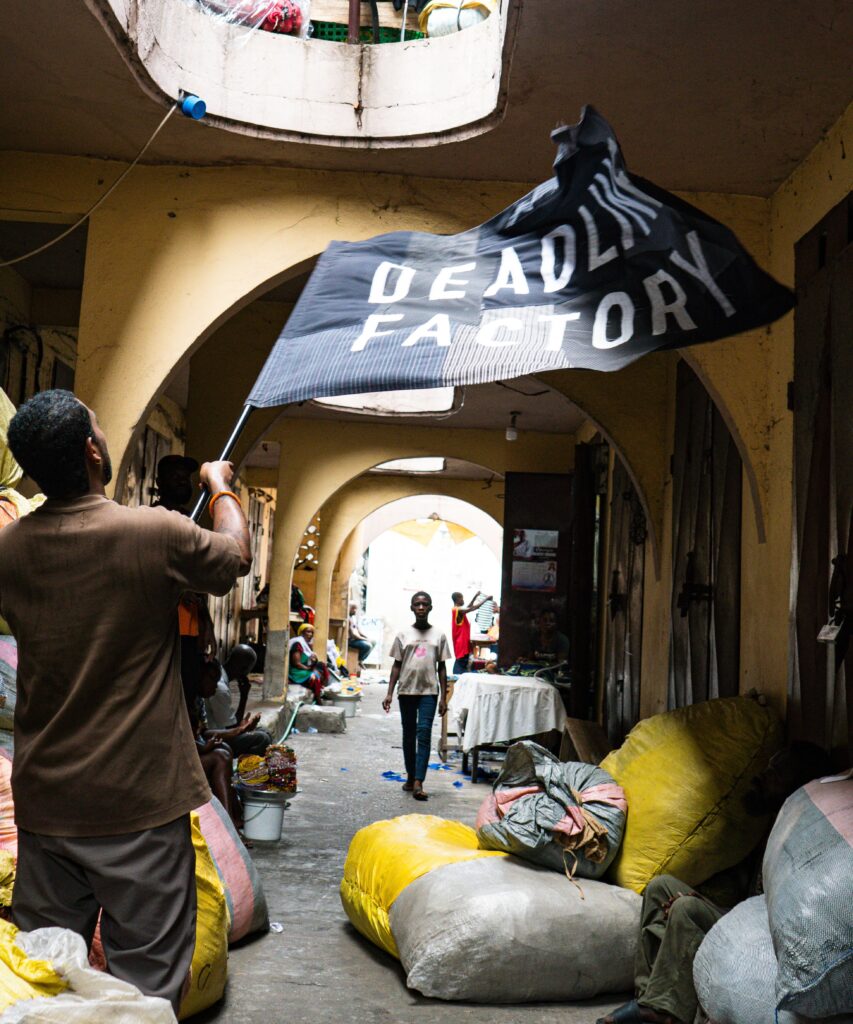
Here, around 15 million garments arrive every week from the US, Europe and Asia, with at least 40% ending up in landfills or polluting the waterways. Also here, a growing ecosystem of activists, artists and makers are responding to this mountainous surplus by designing new systems of re-use and production. In their hands, this material evidence of waste colonialism is transformed into an active, poetic counter to an industry that churns out anything up to 150 billion garments a year. However, Milani believes that Ghana should not simply be painted as a victim, noting that the authorities have failed to assert legal controls on imports, nor establish official waste systems. Meanwhile Kantamanto, one of the world’s largest second-hand markets, has become both a vital centre of entrepreneurship and a resilient model for large-scale circularity.
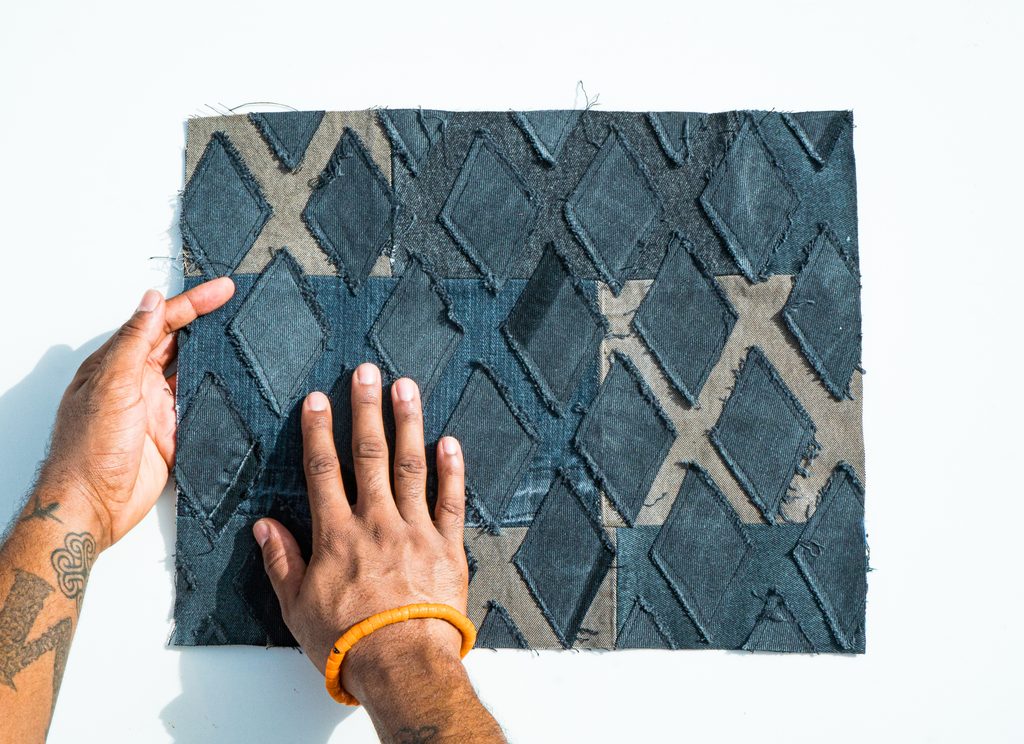
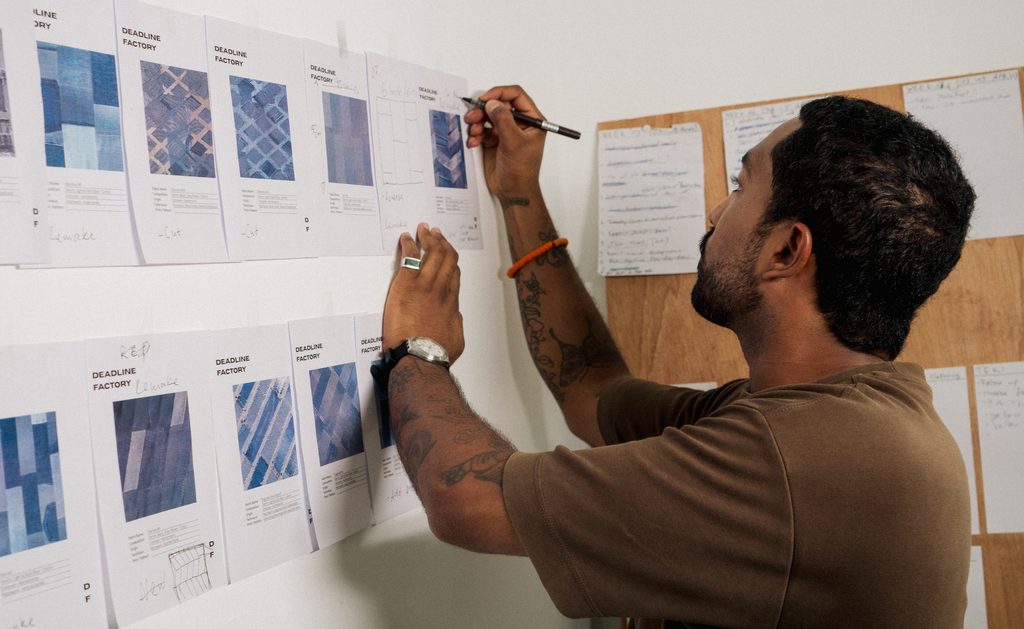
Milani was welcomed into Kantamanto’s vast community by local advocates (and Assemblage Worldwide collaborators) The Revival, who introduced him to reliable vendors for his source materials – non-stretch denim jeans and button-up cotton shirts. Then the complex, six-month process of establishing Deadline Factory began. “There was no playbook,” he smiles. “Excuse my language but it was a lot of fuck around and find out! It was a lot of experimenting and encountering learning curves.”
“People think of upcycling as being intentionally raw but we’re making textiles so refined that they could sit next to newly produced fabrics”
He found a house to renovate into a studio. “It’s my little arts hub where I can live, work and host events – it’s where everyone is welcome to come and feel comfortable.” He then shipped in equipment and established relationships with dyers and tailors who were willing to work in new ways. And together they developed the manufacturing process – washing and deconstructing garments into their skeletal parts, cutting them into panels and repeatable shapes, and collaging and sewing them together, followed by dying and quality control. “On average, 1 square metre of cloth is made up of around 75 patchworked pieces and we can make 4 to 5metres a day. We’re still in the prototyping phase and continually looking for efficiencies.”
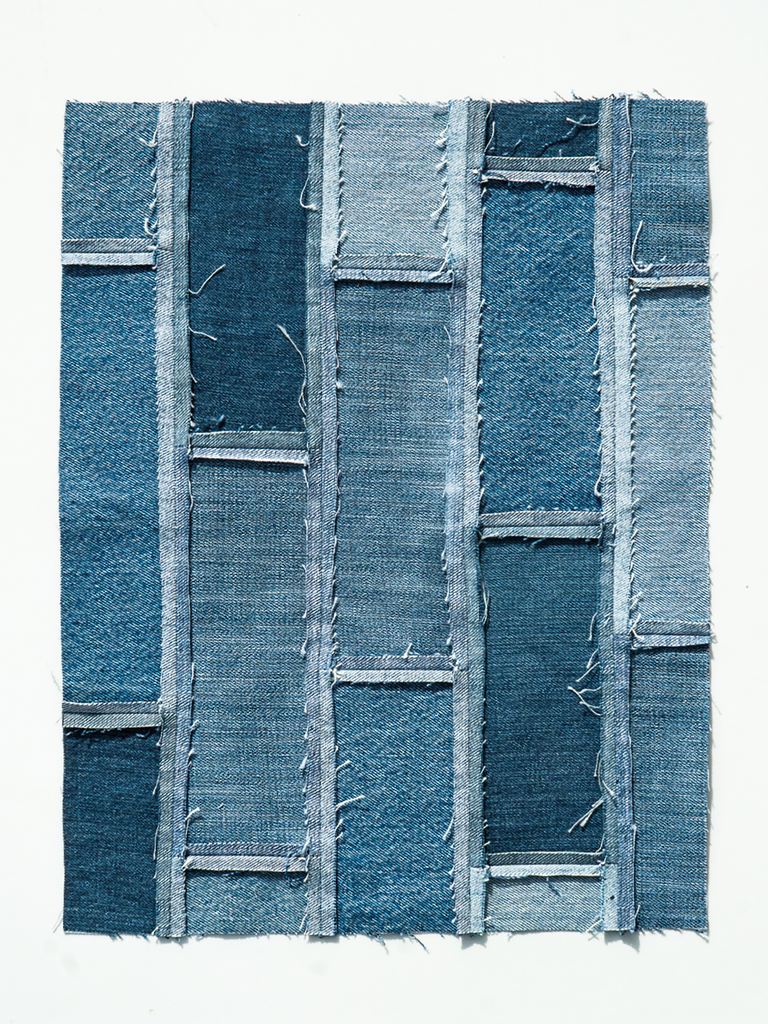
The first fruit of these labours is Deadline Factory’s Auto-Cycle collection, a capsule range of panelled and checked designs with a clean and elegant finish. “People think of upcycling as being about intentionally raw products but it’s important for me to make textiles so refined that they could sit next to newly produced fabrics. I love that rough aesthetic but it’s niche, whereas beautiful custom textiles can have a broader appeal.”
Recently putting the collection to work, Deadline Factory won the 2026 Swiss Design Awards for its collaborative project with Ghanaian designers YaYa concept, Palm Wine Ice Cream, Jermaine Bleu, Tique Design, Subwae and Selassie Thefuerst. “It was so inspiring to see the true potential of the fabrics,” says Milani of the final line-up of pieces, which explored the versatility of the cloths through each designer’s own aesthetic language. For example, Jermaine Bleu incorporated some of his own kente off-cuts into a statement overcoat, Kusi Kubi of PWIC developed a pinstripe shirt and Tique Design came up with an inviting denim pouf.
The prize has allowed Milani to think about what comes next. In the studio, he’s experimenting with techniques such as sun bleaching, appliqué, embroidery, abstract wax printing and block printing. He’s researching new machinery that could allow for smoother seaming and elevate the finished product for fashion, interiors and special applications. And he’s hoping to go beyond Kantamanto and start sourcing directly from the dumps. All with the end goal of scaling up into a viable business. “There are many high-end textile manufacturers around the world but none of them are making fully repurposed materials. Deadline Factory can close that gap. We could be in a position where we handmake textiles for haute couture clients while producing more commercial fabrics for a wider market.”
And therein lies a beautiful irony. The global apparel industry puts up a glossy front that belies the infrastructures, supply chains, resources and technologies that lie beneath. It’s a system in constant movement across borders, ecologies and bodies; and driven by our unquenchable thirst for more. In this make-believe world, the price tag on a garment rarely relates to its true cost, and those who benefit most are far from those whose labour and lands birthed it – or who receive it as dead waste at the other end. And yet in Ghana, at one such end, these leftovers not only reveal these hidden systems but create the roots of alternative pathways. So, Milani has notes, it’s only logical to grow something sublime from the garbage, and to end up with a next-generation product so desirable, it can feed directly back into the system that caused the harm in the first place. And while he may be a dreamer, he’s a pragmatist too: “We’ve got to reach further than my own community. We’ve got to have a strategy and we’ve got to sell.”
Words Helen Jennings
Photography AJ Adams, Kwaku Owusu Agyekum